
A worn-out driveway can affect more than the appearance of your home. Cracks, settling, uneven sections, and deteriorating concrete can make a driveway harder to use and may continue getting worse through Minnesota’s freeze-thaw cycles.
For Minneapolis homeowners, deciding when to replace a driveway—and understanding what goes into a proper replacement—can help you make a better long-term investment in your property.
At Twin Cities Concrete Works, we install and replace concrete driveways designed specifically for Minnesota conditions. From removing the existing slab to preparing the base and pouring the new concrete, every part of the process plays a role in how well your driveway performs for years to come.
When Should You Replace a Concrete Driveway?
Not every crack means your driveway needs to be completely replaced. Small surface cracks or isolated damage may sometimes be manageable, particularly when the surrounding concrete is still structurally sound.
Replacement becomes more likely when damage is widespread or the underlying base has begun to fail.
Common signs that it may be time for a new driveway include:
- Large or expanding cracks
- Multiple cracked or broken sections
- Concrete that has significantly settled or shifted
- Uneven areas that collect water
- Crumbling or deteriorating edges
- Extensive surface scaling or deterioration
- Sections that have lifted or sunk after repeated freeze-thaw cycles
Older driveways may also reach a point where continued repairs are no longer the most practical option. Twin Cities Concrete Works notes that a properly installed concrete driveway in Minnesota can typically last around 25–35 years, although installation quality, drainage, maintenance, and weather exposure all influence its lifespan.
Why Minneapolis Driveways Take a Beating
Minnesota’s climate creates particularly challenging conditions for exterior concrete.
Moisture can enter small cracks or porous areas of concrete. When temperatures drop below freezing, that moisture expands. As temperatures rise again, it thaws. Repeated freeze-thaw cycles can gradually contribute to cracking, surface deterioration, and movement.
The soil and base beneath the driveway matter just as much.
Poor drainage, inadequate compaction, or an insufficient base can allow sections of the driveway to settle or move over time. That is why replacing a driveway involves much more than simply removing old concrete and pouring a new slab.
Proper preparation underneath the driveway is one of the most important parts of creating a surface that can handle Minneapolis weather.
What Happens During Concrete Driveway Replacement?
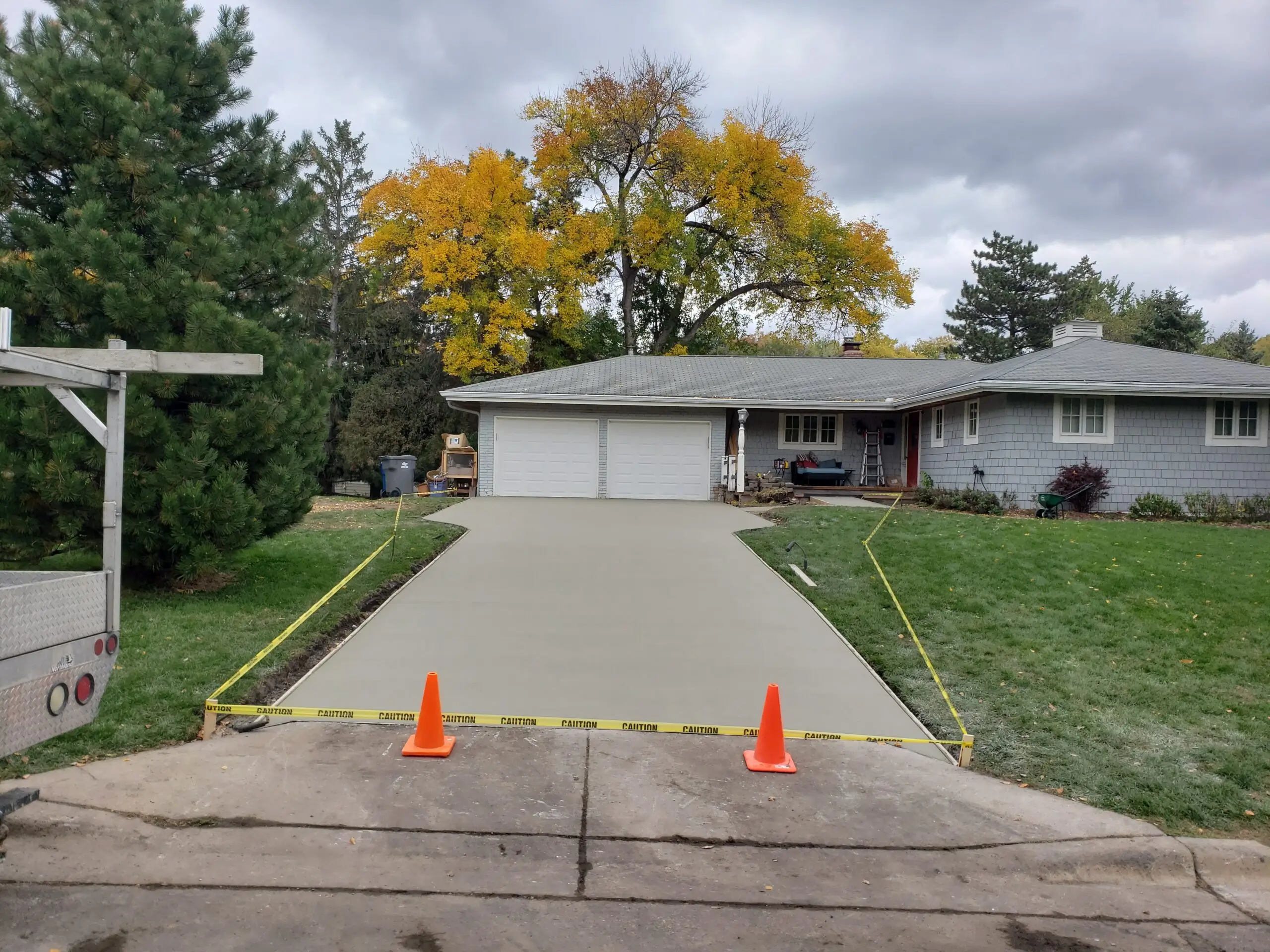
Although every property is different, driveway replacement generally follows several important stages.
Removing the Existing Driveway
The existing concrete is broken apart and removed from the property. Removing the old slab also gives the contractor an opportunity to evaluate the conditions underneath it.
If an old driveway has experienced significant settling or cracking, problems with the existing base may become more apparent once the concrete is gone.
Preparing the Base
Base preparation is one of the most important steps in the entire project.
The area must be properly excavated, graded, and compacted before new concrete is poured. A stable base helps support the weight of vehicles while reducing movement underneath the slab.
Good grading also helps move water away from areas where it could collect beneath or alongside the driveway.
Setting Forms and Reinforcement
Forms establish the shape, dimensions, and elevation of the new driveway.
Depending on the project, reinforcement may also be incorporated into the slab to improve its strength and help control movement.
Your contractor should be able to explain the planned concrete thickness, base preparation, reinforcement, and finish before work begins.
These are also important details to compare when reviewing estimates. A dramatically cheaper bid may not include the same preparation or materials as another contractor’s proposal. Before choosing someone for your project, review our guide to red flags to watch for when hiring a concrete contractor.
Pouring and Finishing the New Driveway
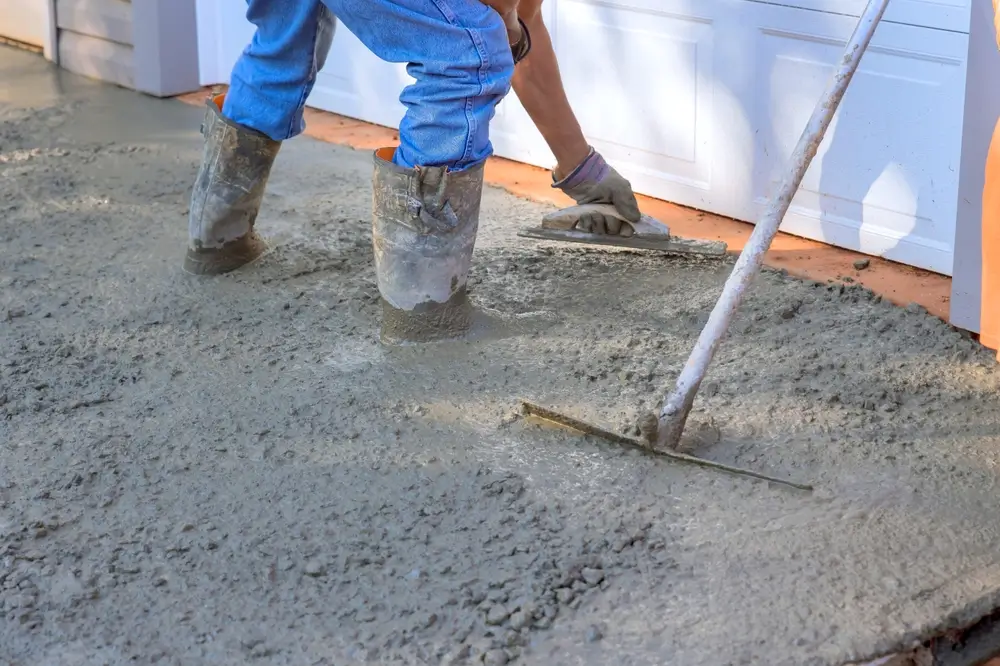
Once the base, forms, and reinforcement are ready, the concrete can be poured.
The concrete is placed, leveled, and finished according to the desired appearance. Broom-finished concrete remains a popular driveway option because it creates a clean appearance while providing additional surface texture.
Homeowners may also choose colored or decorative concrete when they want the driveway to become a larger part of their home’s exterior design.
Control joints are incorporated into the driveway to help manage where normal shrinkage and movement occur as the concrete cures and experiences temperature changes.
How Long Before You Can Use a New Concrete Driveway?
Fresh concrete needs time to cure and gain strength.
Twin Cities Concrete Works generally recommends waiting approximately seven days before driving on a newly poured driveway. Concrete continues curing after that point and typically reaches its full cure at approximately 28 days.
Heavy vehicles, trailers, RVs, or large delivery trucks should generally remain off the driveway until the concrete has had additional time to cure.
Your contractor should provide specific instructions based on the concrete mix, weather, and conditions during your project.

When Is the Best Time to Replace a Driveway in Minneapolis?
Concrete driveway projects are typically completed during Minnesota’s warmer construction season.
Moderate temperatures can provide favorable conditions for concrete placement and curing, which makes spring and fall particularly popular times for outdoor concrete work.
However, scheduling shouldn’t be based on the calendar alone. Temperature, precipitation, ground conditions, and the forecast surrounding the pour all matter.
If you’re trying to determine when to schedule your project, read our guide on the best time to pour concrete in Minnesota.
Planning ahead is also important. Concrete contractors can become especially busy during periods of favorable weather, so homeowners considering a driveway replacement may want to request estimates well before their preferred installation date.
How Long Should a New Concrete Driveway Last?
A properly installed concrete driveway can provide decades of use.
Twin Cities Concrete Works estimates that a well-built driveway in Minnesota can typically last 25 to 35 years when the correct concrete mix, base preparation, joints, installation techniques, and maintenance are used.
Long-term performance begins during construction.
A driveway built on a poorly prepared base may start settling or cracking long before the concrete itself should wear out. Investing in proper site preparation and professional installation can help prevent premature problems.
Maintenance matters too. Keeping the surface clean, minimizing exposure to harsh deicing chemicals, addressing drainage issues, and periodically sealing the concrete can help protect it from Minnesota weather.
What Should You Ask a Concrete Driveway Contractor?
Before choosing a contractor, don’t evaluate proposals based only on the final price.
Ask what is actually included in the driveway installation.
Important questions include:
- How will the existing driveway be removed?
- What base preparation is included?
- How thick will the concrete be?
- What reinforcement will be used?
- How will drainage and grading be addressed?
- What type of finish is included?
- Where will control joints be placed?
- How long should you wait before using the driveway?
- Is cleanup and disposal of the existing concrete included?
A detailed estimate makes it easier to compare contractors and understand exactly what you’re paying for.
Replacing a Concrete Driveway in Minneapolis
A new concrete driveway is a significant home improvement, but the finished surface is only part of the project.
Removal, excavation, grading, base preparation, reinforcement, concrete placement, finishing, and curing all contribute to how well your driveway handles daily vehicle traffic and Minnesota’s changing seasons.
Twin Cities Concrete Works provides professional concrete driveway installation and replacement throughout Minneapolis and the surrounding Twin Cities area. Our team focuses on proper preparation, durable materials, and detailed installation to create driveways built for long-term performance.
If your existing driveway is cracked, settling, or simply reaching the end of its useful life, contact Twin Cities Concrete Works to request a free estimate and discuss replacement options for your property.