
Quick answer
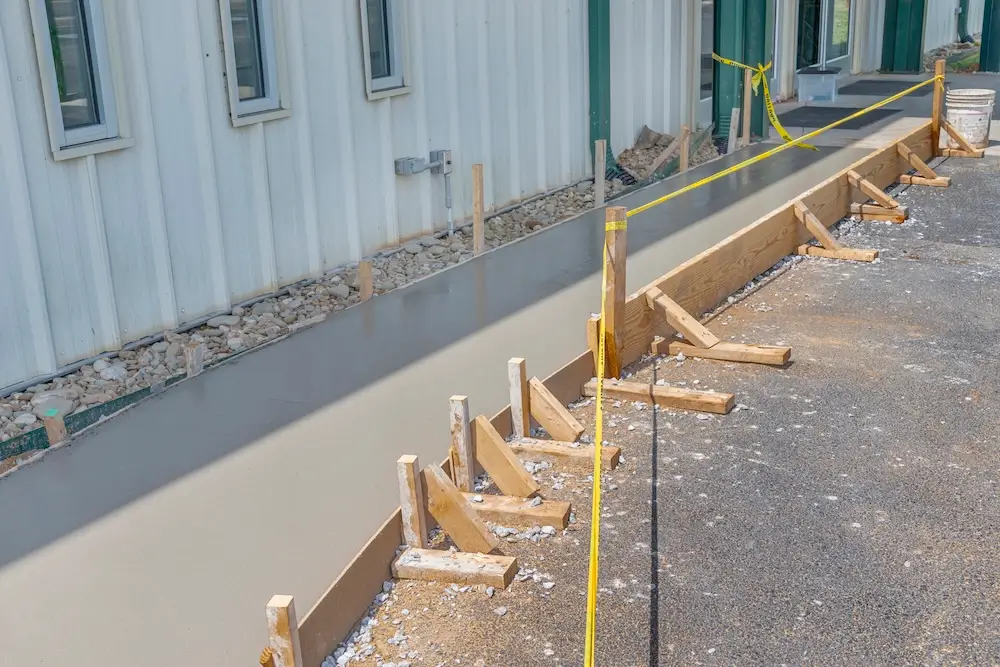
A new concrete sidewalk or walkway in the Twin Cities typically costs $6–$12 per square foot for a plain broom finish, $8–$14 per square foot to tear out and replace an old one, and $12–$20 or more per square foot for stamped or colored concrete. A typical 4-ft-wide, 40-ft-long front walk (160 sq ft) runs about $1,000–$2,200.
Your final price depends on whether old concrete has to come out, how easy the site is to reach, how thick the slab is, and which finish you choose. Fixing the public sidewalk in front of your house follows separate city rules, covered below.
Twin Cities Concrete Works has poured walkways, sidewalks and entrance steps across Minneapolis, St. Paul and the surrounding suburbs for more than 12 years. The ranges here combine regional cost data with typical local pricing; your written quote will be specific to your property.
Concrete walkway cost by size
Most Twin Cities walkways are 3–5 feet wide, and a 4-ft walk is the most common for front entries. These ranges show installed cost, including base prep, forms, reinforcement and finishing.
|
Walkway |
Square feet |
New, broom finish ($6–$12/sq ft) |
Remove and replace ($8–$14/sq ft) |
Stamped or colored ($12–$20/sq ft) |
|---|---|---|---|---|
|
4 x 30 ft side path |
120 |
$720–$1,440 |
$960–$1,680 |
$1,440–$2,400 |
|
4 x 40 ft front walk |
160 |
$960–$1,920 |
$1,280–$2,240 |
$1,920–$3,200 |
|
5 x 50 ft entry walk |
250 |
$1,500–$3,000 |
$2,000–$3,500 |
$3,000–$5,000 |
|
4 x 75 ft house-to-garage walk |
300 |
$1,800–$3,600 |
$2,400–$4,200 |
$3,600–$6,000 |
Very short paths (under about 75 sq ft) often hit a contractor’s minimum job charge, so the per-square-foot price climbs. Concrete steps at the end of a walk are priced separately; in Minneapolis they average $210–$630 per 4-ft-wide step, according to Angi’s Minneapolis step cost data.
What affects the cost of a concrete walkway in the Twin Cities?
Tear-out, site access, slab thickness and finish account for most of the difference between a low and high quote.
Removing old concrete
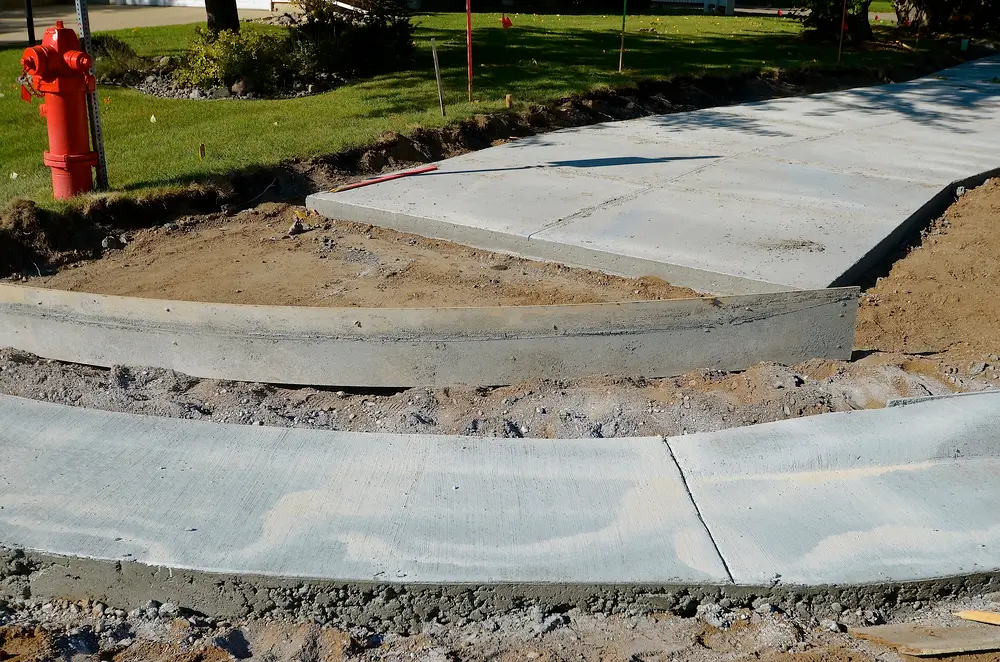
Breaking out and hauling away an existing walk adds roughly $2–$6 per square foot in the Minneapolis area, based on Angi’s local demolition figures. Thick or heavily reinforced slabs sit at the high end.
Base prep and soil
Much of the metro sits on clay soils that hold water and heave in winter. A proper job excavates, adds and compacts 4–6 inches of Class 5 gravel, and slopes the walk so water drains off. Cutting this step is the most common reason walks crack and tilt within a few years.
Thickness and reinforcement
A 4-inch slab is standard for foot traffic. Sections that cross a driveway or carry snowblowers and lawn equipment may need 5–6 inches. Wire mesh, rebar or fiber reinforcement adds a modest amount per square foot but helps hold cracks together.
Finish
A broom finish is the most affordable and gives the best grip on ice. Exposed aggregate, integral color and stamped patterns raise the price and need sealing every 2–3 years to resist salt damage.
Access and layout
Tight side yards, steep grades, long wheelbarrow runs and curves all add labor. Straight runs with truck access close to the work are the cheapest to pour.
Season and scheduling
The concrete season here runs roughly late April through October. Booking in late winter or early spring gives you the most scheduling flexibility before calendars fill.
Concrete quality for Minnesota
Ask for air-entrained concrete, typically in the 3,000–4,000 psi range for walks. Air entrainment protects the surface from freeze-thaw scaling and salt, which is essential in our climate.
Public sidewalk vs. private walkway: who pays and who can do the work?
In Minneapolis and St. Paul, the property owner pays to repair the public sidewalk in front of their home, even though it sits in the city right-of-way. Your private walkway from the sidewalk to your door is entirely your call.
Minneapolis
Minneapolis inspects sidewalks on a rotating schedule and mails a Sidewalk Repair Notice at least 21 days before work starts, according to the City of Minneapolis sidewalk repair guide. The city reported an average cost of $1,255 per property for 2024 repairs, which you can pay in full or have added to your property taxes as a special assessment.
You can also hire a private, insured contractor instead. The contractor must hold an approved Sidewalk Inspection Permit and build to city standards. Hiring your own contractor can make sense when you want to replace your private walk, steps or driveway apron at the same time.
St. Paul
St. Paul generally replaces public sidewalks as part of street reconstruction projects and assesses the cost to abutting property owners after the work is done. Owners can typically hire a licensed and bonded contractor instead; contact Saint Paul Public Works before scheduling any work in the right-of-way.
Suburbs
Edina, Bloomington, Roseville, Richfield and other suburbs each set their own rules. Many maintain public sidewalks themselves, while others assess owners. Check with your city’s public works department before replacing any sidewalk panel next to the street.
A private walkway on your own lot usually needs no permit, though it counts toward impervious surface limits.
Repair, lift or replace?
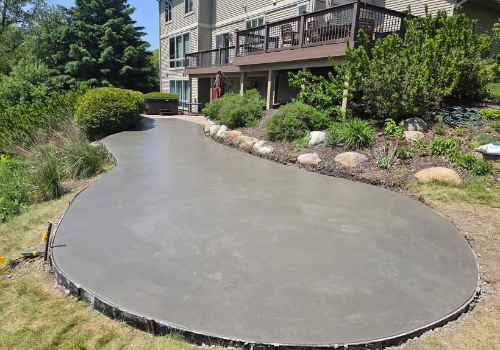
Replace a walkway when it has widespread cracking, crumbling or scaling, or when panels have shifted more than an inch or two. Smaller problems often have cheaper fixes.
|
Problem |
Usual fix |
Relative cost |
|---|---|---|
|
Hairline cracks, solid slab |
Crack fill and seal |
Lowest |
|
One or two sunken panels, otherwise sound |
Mudjacking or foam lifting |
Low to moderate |
|
Surface flaking (scaling) on a sound base |
Resurfacing, a short-term fix |
Moderate |
|
Heaved, broken or crumbling panels |
Remove and replace those sections |
Moderate to high |
|
Failing base, many broken panels, poor drainage |
Full tear-out and new walk |
Highest |
How to save on a concrete walkway
- Combine projects. Pouring a walk, steps, apron or patio in one visit cuts mobilization costs.
- Keep it straight. Straight runs with a broom finish cost the least per square foot.
- Replace only failing panels when the rest of the walk is sound.
- Book early. Get quotes in late winter to lock in spring or early summer dates.
- Compare quotes line by line: base depth, thickness, reinforcement, air entrainment, sealing and haul-away should all be listed.
Get a written walkway quote
Twin Cities Concrete Works replaces sidewalks, front walks and entrance steps across Minneapolis, St. Paul, Bloomington, Burnsville, Eagan, Eden Prairie, Edina, Golden Valley, Plymouth, Richfield and St. Louis Park. We handle city sidewalk permits, haul away the old concrete, and pour with air-entrained mix on a compacted base built for Minnesota winters.
See recent work like our Minneapolis wraparound walkway and backyard sidewalk in Minneapolis, or learn more about our sidewalk services. Call 612-930-7097 or request a free quote.
Planning a patio too? Read Concrete Patio Ideas for Small Twin Cities Backyards.
Frequently asked questions
How much does a concrete sidewalk cost per square foot in Minnesota?
Most Twin Cities homeowners pay $6–$12 per square foot for a new broom-finish walk and $8–$14 per square foot when old concrete has to be removed first. Stamped or colored finishes run $12–$20 or more.
How much does it cost to replace a 4×40 front walkway?
A 4×40 ft walk is 160 sq ft. Expect roughly $1,300–$2,250 to remove and replace it with a plain broom finish, or $1,900–$3,200 for stamped concrete.
Who pays for public sidewalk repair in Minneapolis?
The adjacent property owner. Minneapolis bills owners after its annual repair program, and the bill can be paid at once or added to property taxes as a special assessment.
Can I hire my own contractor to fix the city sidewalk?
In Minneapolis, yes, as long as the contractor is insured, holds a Sidewalk Inspection Permit and builds to city standards. St. Paul and most suburbs allow licensed and bonded contractors too; check with your city first.
How long does a concrete walkway last in Minnesota?
A properly built walk on a compacted base with air-entrained concrete can last 25–40 years. Sealing and avoiding rock salt in the first winter help it reach the long end of that range.
How long until I can walk on a new sidewalk?
Usually 24–48 hours for foot traffic. Wait about 7 days before rolling heavy equipment across it.
Is concrete or pavers cheaper for a walkway?
Poured concrete is usually cheaper up front and needs less maintenance. Pavers cost more to install but can be lifted and reset if frost moves them.